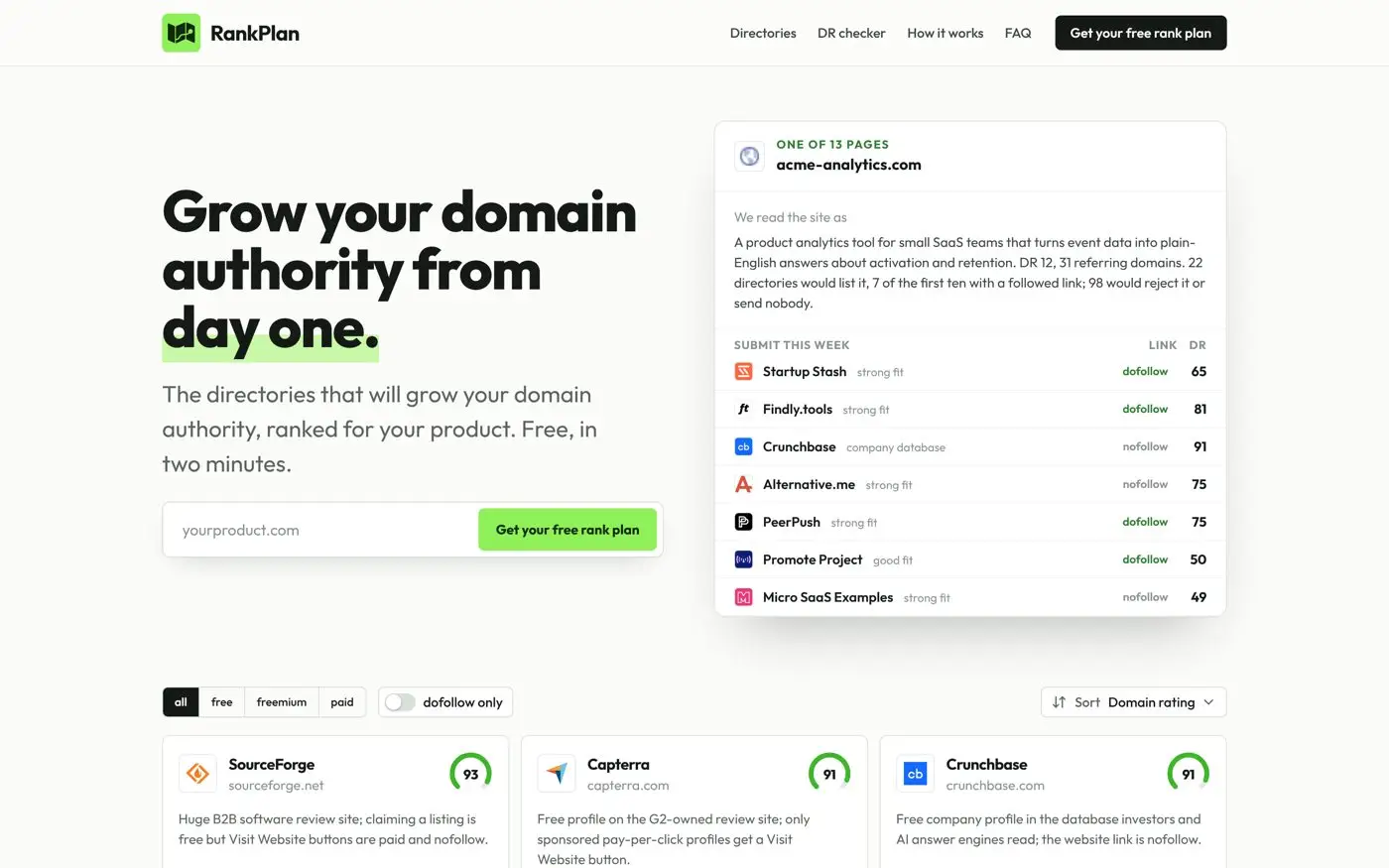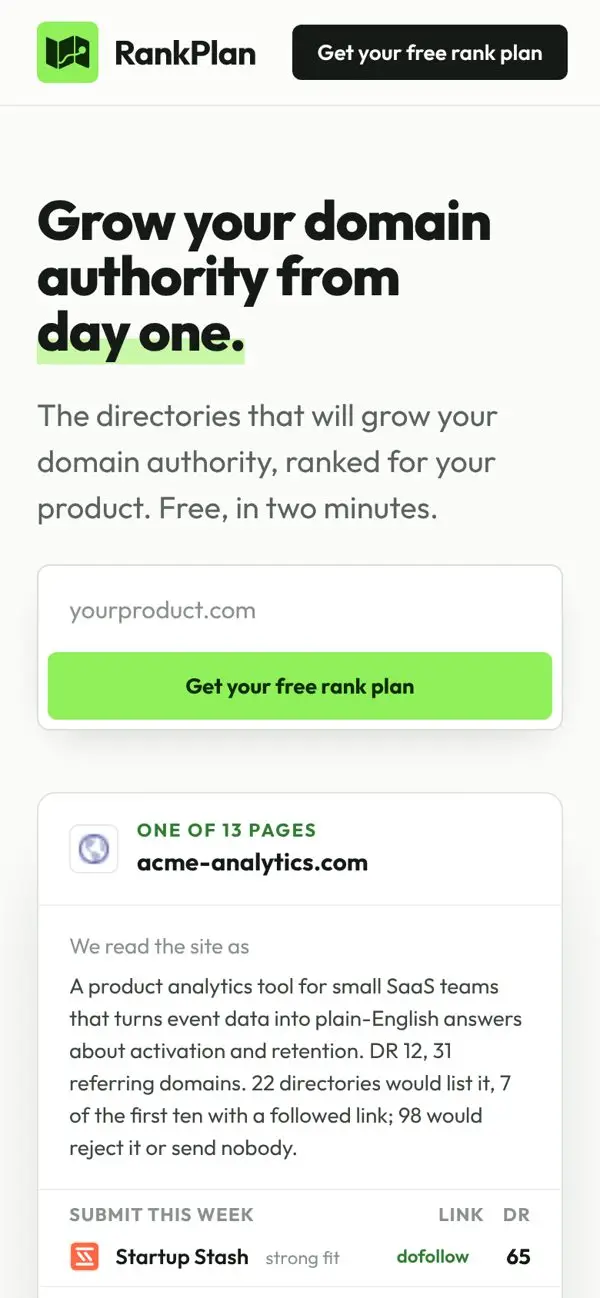
The brief
Founders and small teams know they should be doing SEO, and now they keep hearing about AI search too. Most tools in the space look like dashboards full of numbers, and their websites read the same way: a grid of feature icons and a promise to “10x your traffic”.
CitedSEO needed the opposite. One calm promise, then proof that the product actually runs on its own. The site also had to work as a growth engine in its own right, because a search product with a site nobody finds is a hard sell.
The idea
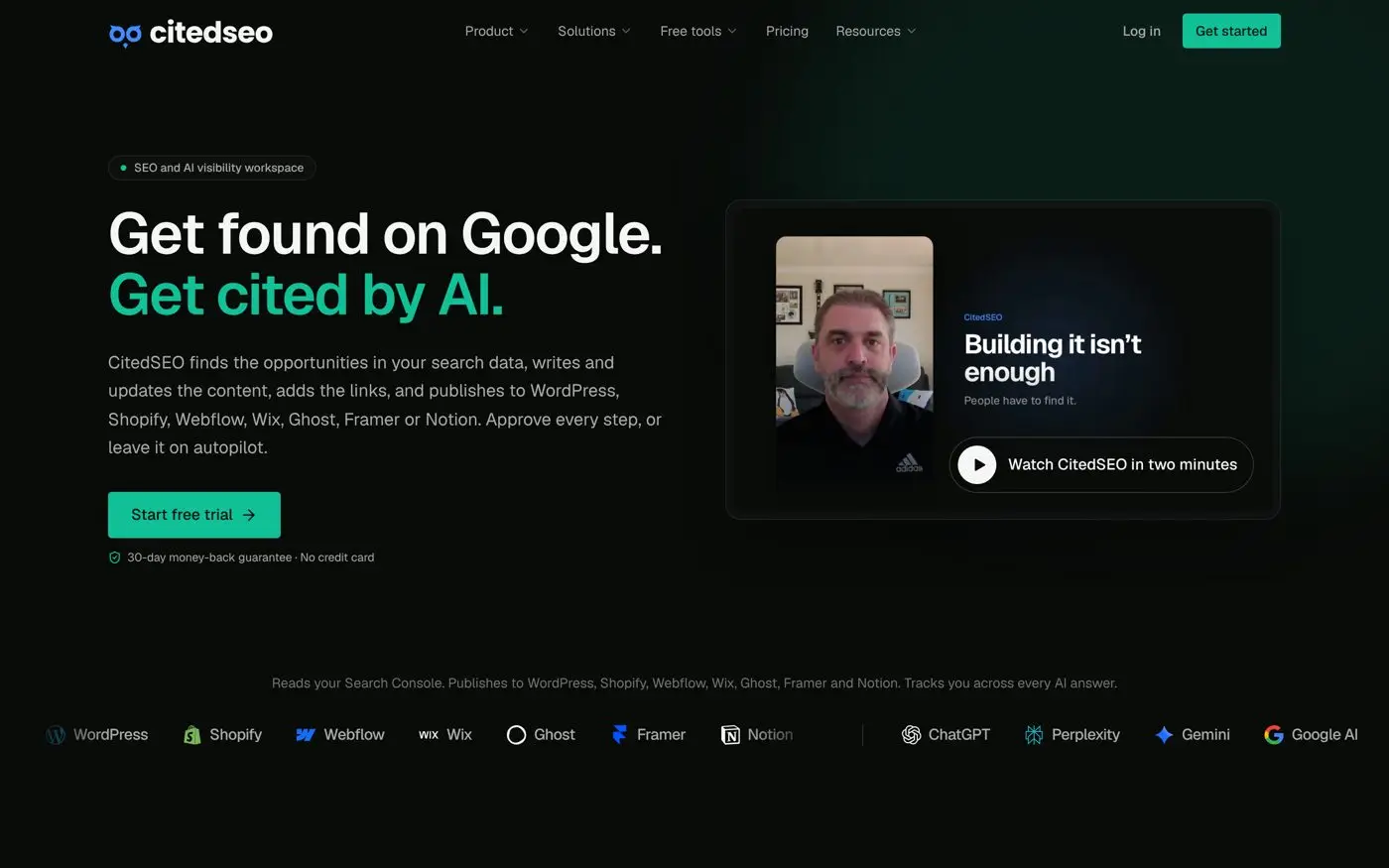
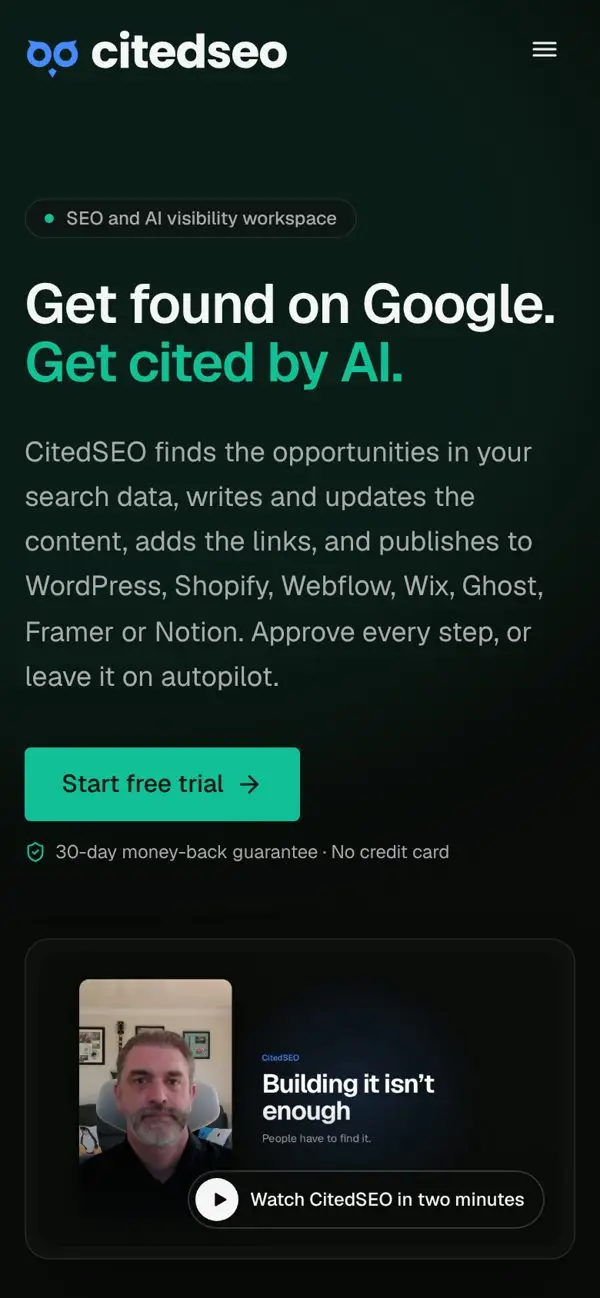
Lead with the outcome in plain words, “get found on Google and cited by AI”, and let a short founder film do the explaining. Underneath, a single quiet line of every platform it publishes to (WordPress, Shopify, Webflow and more) answers “will it work with my site?” before anyone has to ask.
Rather than describing features, the hero shows them: the same opportunity cards a customer sees in the app, each with the fix it suggests. The rest of the page follows the order a buyer thinks in: what it does, does it work with my setup, what does it cost, and can I trust it.
The build
Built as a fast static site that scores in the high 90s for mobile performance. The product’s own features became real, specific sections (opportunity queue, article writer, AI visibility tracking) rather than generic icons.
The bigger job was the structure behind the homepage. Every feature, integration, audience and goal got its own page with its own search intent, and twelve free tools were built as standalone pages that answer a real question on their own. That turns the site from a brochure into something that earns visitors every day.
What it does now
The site carries the product’s whole funnel: it explains, shows the product working, offers free tools to try, and sends people to a free start. Its own articles are written and published with CitedSEO itself, which is the best proof the product works.