


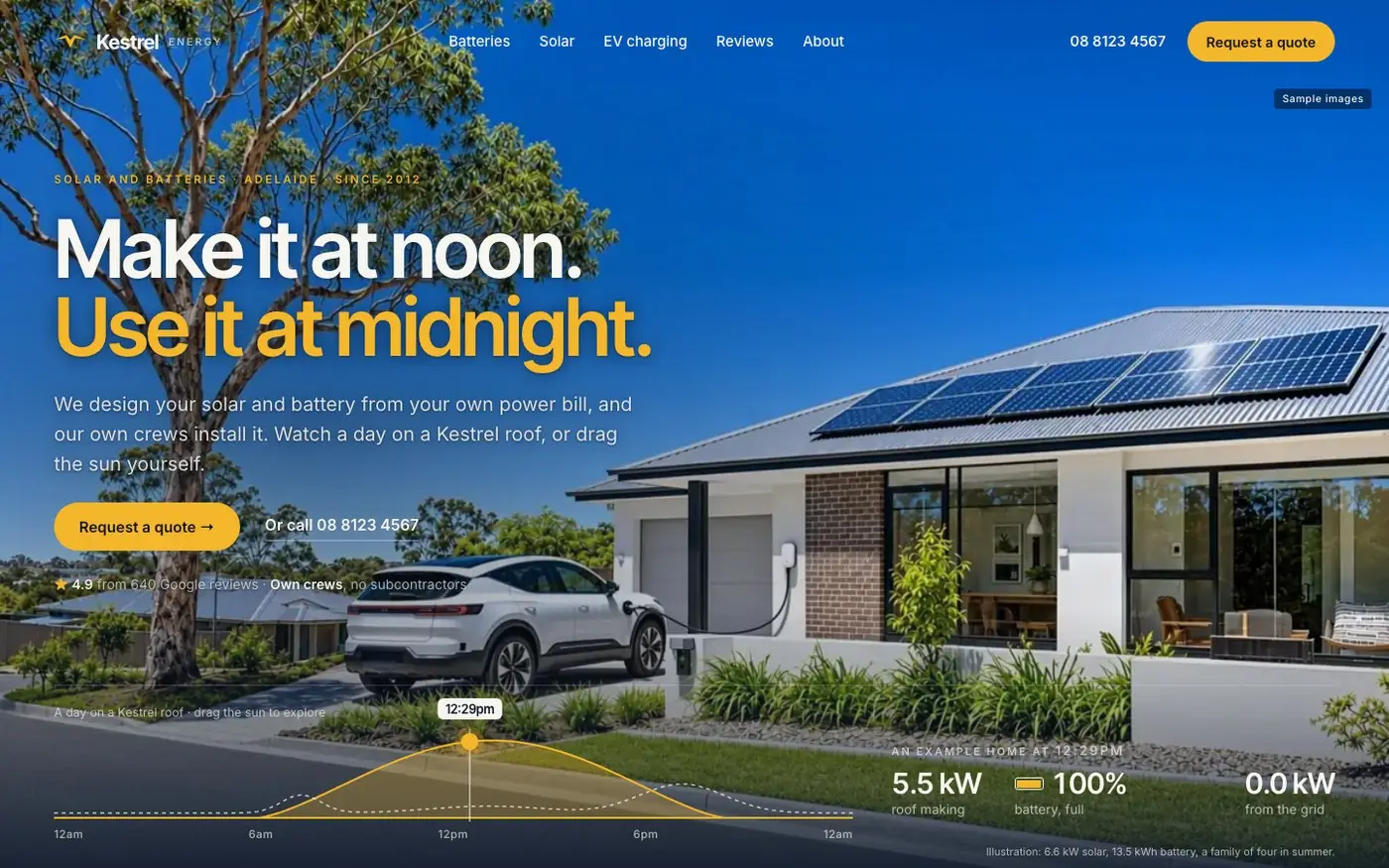
Concept · Kestrel Energy
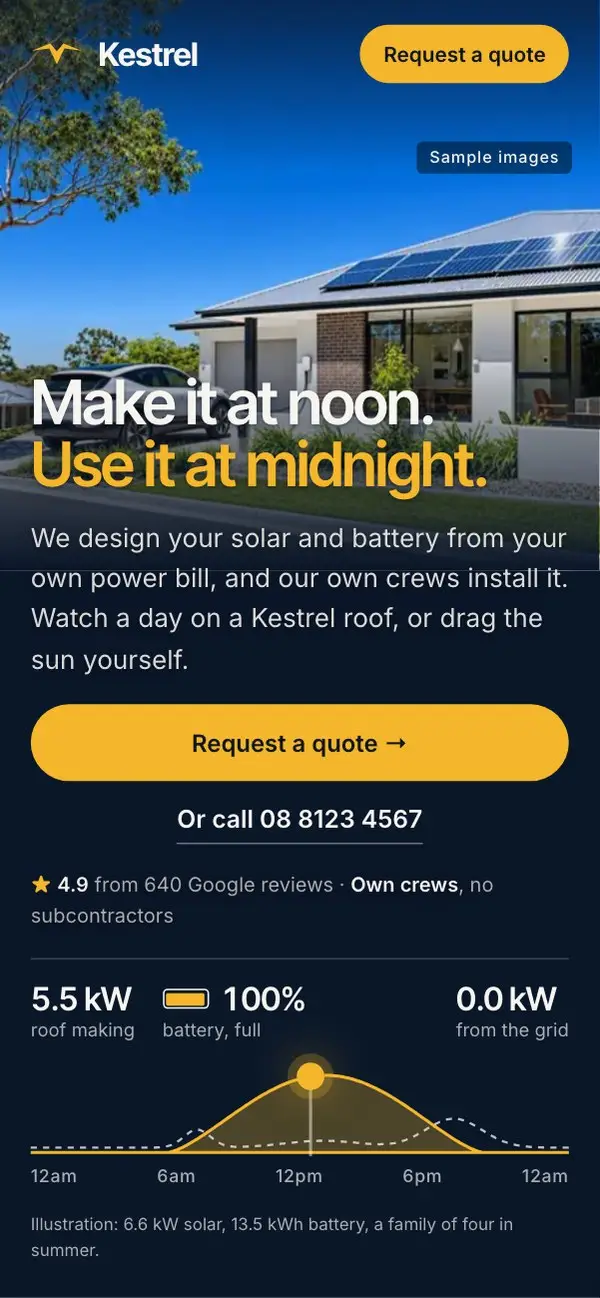
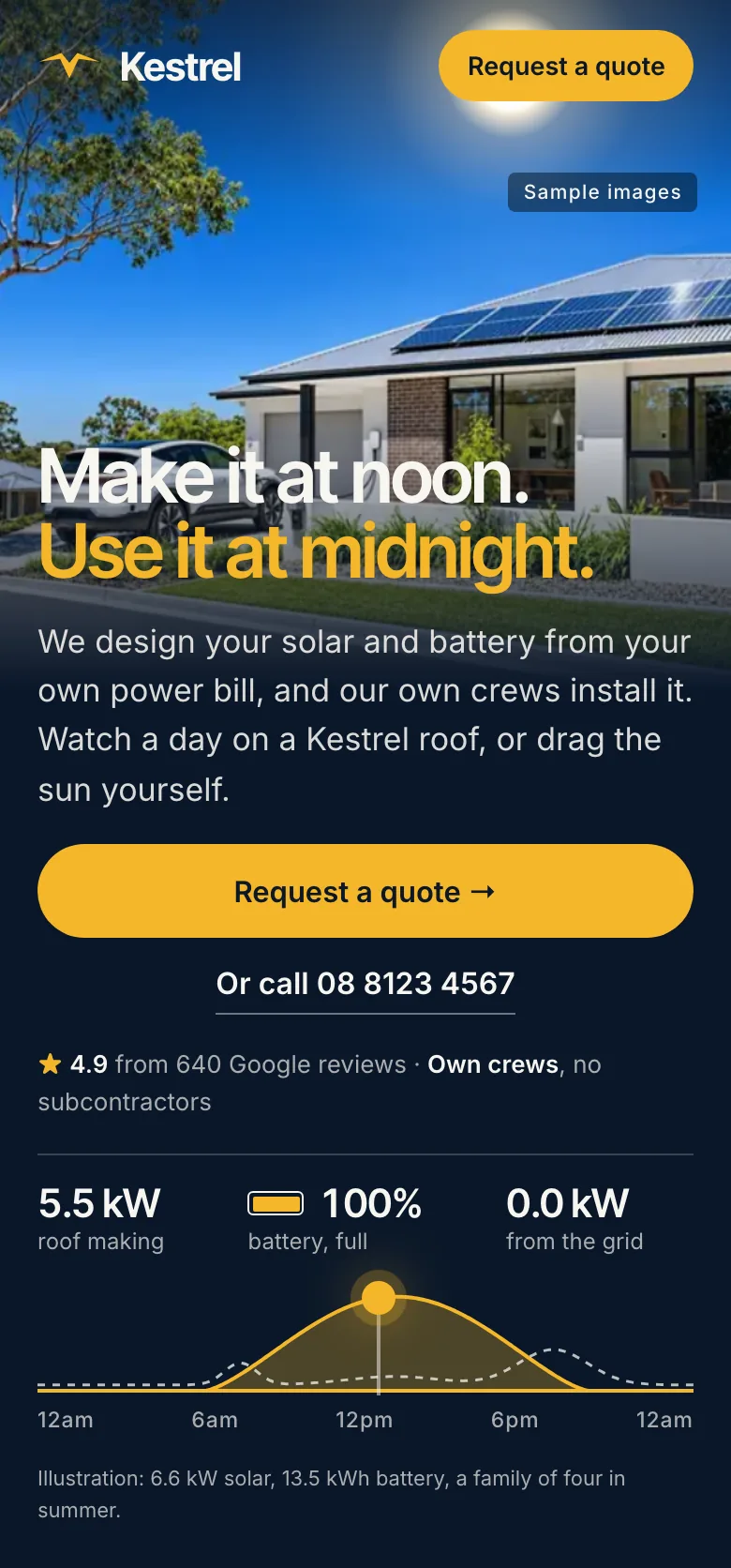
Mobile
Lighthouse94100100100
Lighthouse94100100100
Kestrel Energy
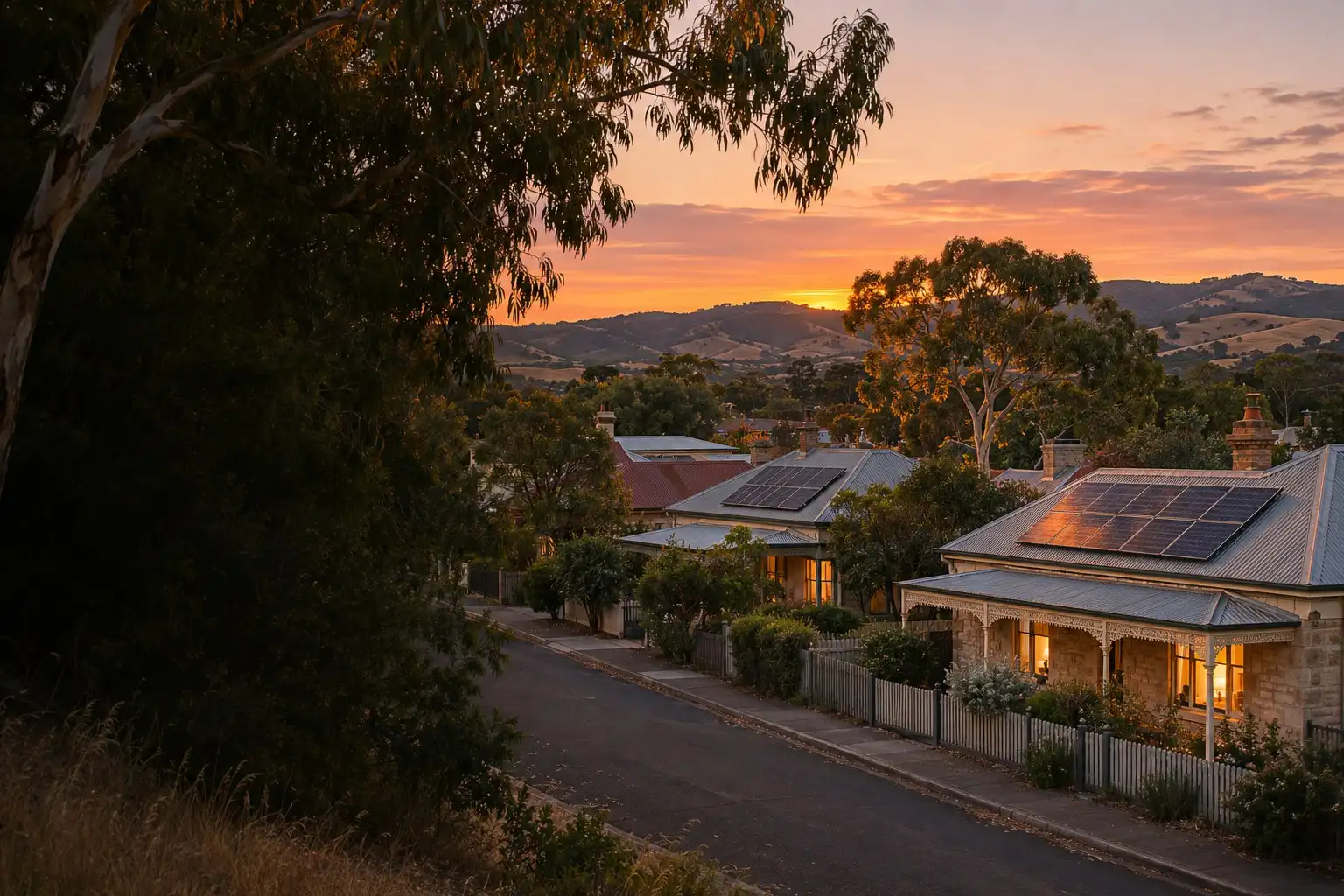
Drag the sun through a day. The house, the solar curve and the battery change with it, so the product sells itself on the first screen.
 Book an intro call →
Websites for South Australian solar and battery installers that open fast on a phone, answer what buyers actually ask, and turn the clicks you pay for into quote requests.
Every dot is a real solar firm website, scored by Google's Lighthouse on a phone. Ninety is where Google starts calling it good.
The chart shows 60 of 244 sites, picked at random. Scores range from 18 to 99, average 62. 17 of 244 reached 90. Sites we have built score 98, 97, 98, 94, 93, 91.
How we tested: we ran Lighthouse (mobile, default settings) on the homepage of every South Australian solar and battery firm we could find, and recorded what each one offered on a phone. No business is named.
Source: NETCC approved sellers and Google Maps, 485 sites.A Google Ads click for searches like solar Adelaide costs $20 to $27. 96 of the 246 firms we checked run Google Ads, and their sites are the slower ones, averaging 56 for mobile speed against 66 for everyone else. The median site took 7.2 seconds to show its main content on a phone. Only 8 of 244 managed Google's 2.5 seconds.
A site that scores 90 or more on a phone, so the people you pay for actually see your offer. You see the score on every preview before anything goes live.
Most sites are the same template, with the same panels on the same roof and the same row of brand logos, and 102 of 246 call themselves the best, leading or most trusted. Only one in five shows its own jobs or crew on the first screen, and only 26 say their installers are their own staff.
Your installs, your vans and your people, with a design idea that's yours alone. If your own crews do the work, the site says so on the first screen.
On a phone, 31 sites open with a deal, a giveaway or a rebate countdown, and 32 cover the page with a chat pop-up. Sites with a chat widget average 53 for speed against 65 without one.
One clear message and one action, Request a quote, with your phone number and reviews close by. Rebates and finance get explained properly, not shouted.
South Australians search what a solar battery costs about 1,900 times a month, and ask about the battery rebate another 590 times. Fewer than a third of these sites have a savings or payback calculator. Most answer every question with Get a free quote.
Straight answers on cost, payback, rebates and which battery suits which home, written for SA and kept current, so buyers arrive at your quote form already convinced.
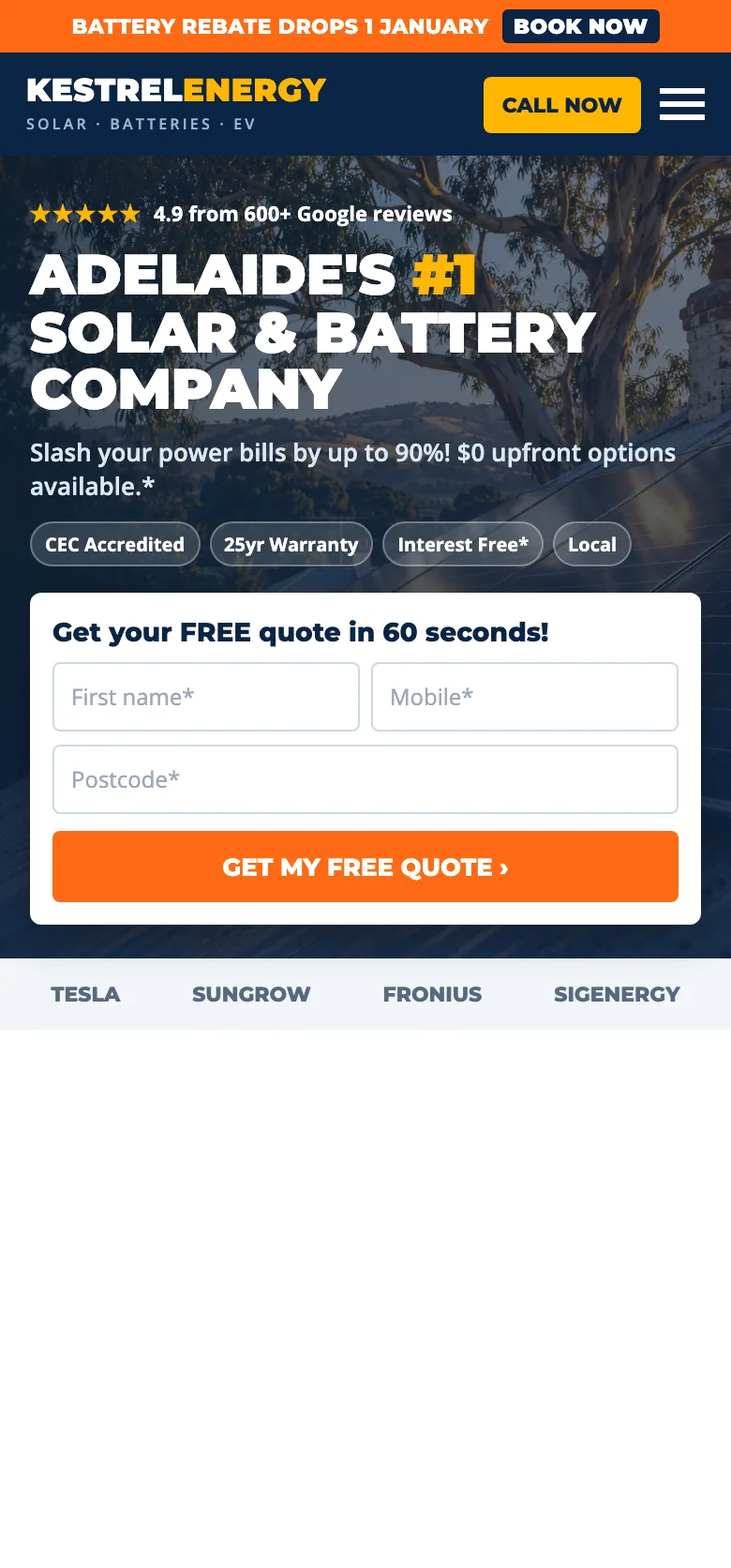
What most visitors see first on a phone, next to what we’d build. Both show a sample solar firm.
Most firms we tested already rely on tools that work, from Google reviews and SolarQuotes to finance partners and the CRM behind their quote form. We keep them. Your quote form still lands where your sales team works, finance applications still go to your partner, and your reviews keep showing, just on a site that loads before the buyer gives up.
A short form that asks what matters, such as your bill, roof and battery interest, and goes straight to whoever quotes.
Plain answers on what a battery costs, what the rebate covers, and how long payback takes, kept current when the rules change.
Real installs by suburb, the people who do them, and the reviews they earned.
Honest pages on the panels, inverters and batteries you actually fit, and why.
A separate path for businesses, councils and farms, with case studies and bigger numbers.
Inverter swaps, battery add-ons, monitoring and maintenance for the systems already out there.
Drag the sun through a day. The house, the solar curve and the battery change with it, so the product sells itself on the first screen.
A 30-minute call with the person who'll build your project. No pitch deck, no sales team. We'll look at what you have, what it needs to do, and whether we're the right fit.

Straight answers on quotes, ads, rebates and rankings.
Yes. Quote requests can go to the CRM, inbox or sales tool you use today, so nothing changes for your team except getting more of them.
A faster page means more of the people you pay for see your offer instead of a loading screen. Google also rewards fast, relevant landing pages with better ad quality, which can lower what you pay per click.
Show honest guides, such as what a typical battery system costs and what changes the price, rather than countdown timers and giveaways. Buyers comparing three quotes trust firms that explain things.
Only for the ones you fit often and recommend. A few honest, detailed pages do more for buyers and for Google than a wall of logos.
Yes. Rebate and pricing pages are built so they're easy to update, and on our Care and Grow plans we keep them current for you when the rules change.
Usually about four weeks from kickoff to live, and about four hours of your time. Your homepage comes first, and you see every page on a private link before anything changes.
Not if it's done properly. We keep the pages that already bring you visitors, point every old address at its closest new page, and check nothing breaks on launch day.